










Babycakes Romero
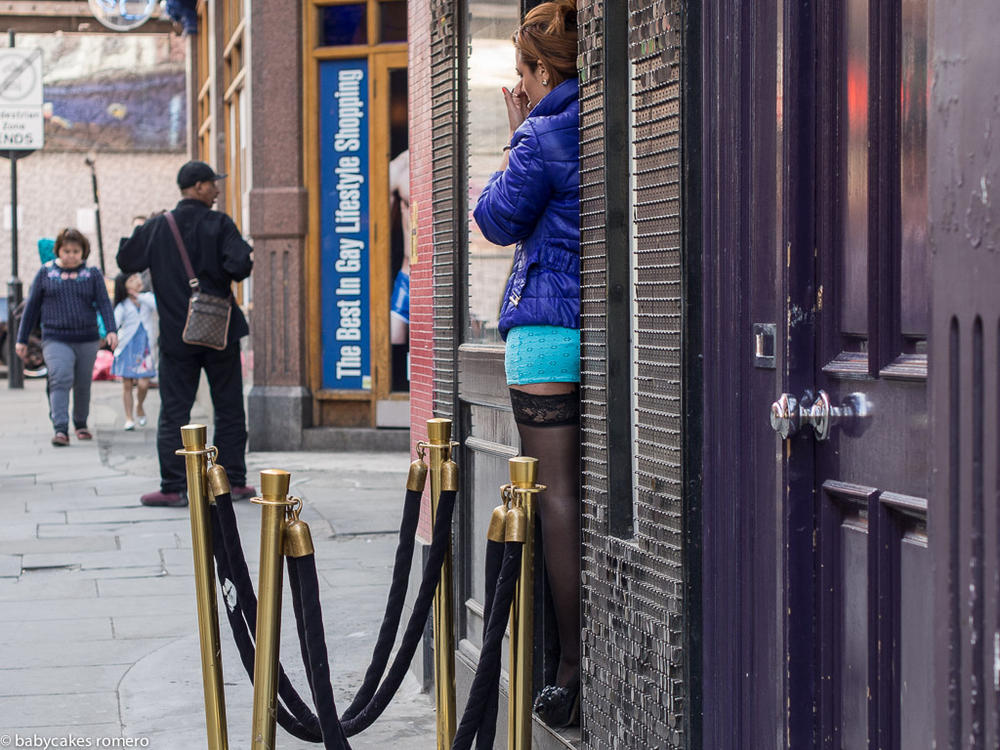
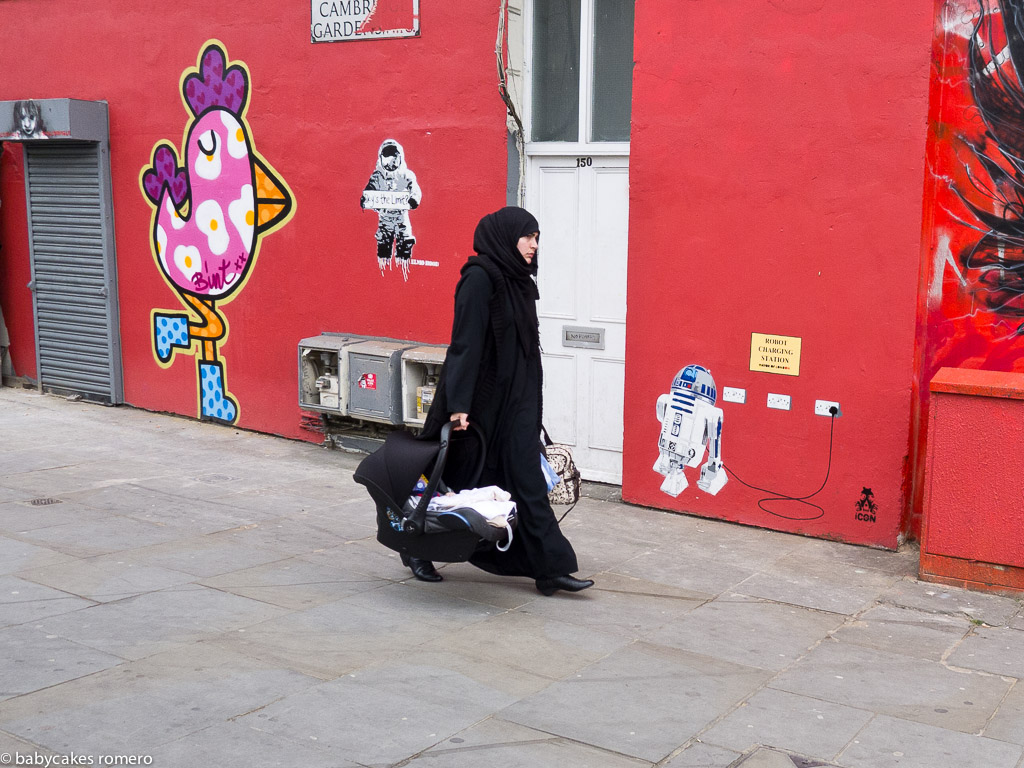
Babycakes Romero is for photography what Banksy is for graffiti.
Behind his alter ego there is the hiding truth of unequal social stratification of the British capital, but also the charming inconsistency. His images talk to transgressive , disinherited , deafeningly bizarre and what carries “aura unnatural” as he says.

Give me your own definition of street photography please.
For me, street photography is anything that isn’t staged. No posing, no preparation. A captured moment that shows real life. it can be taken anywhere. Street photography should always be honest and observational, something that documents the world around us.
Why do you love shooting the life in the streets?
I love the freedom and the simplicity. I never plan to take a photograph but I never leave home without my camera. Fortunately I live in London and there is always something worth documenting in some way. However I will always wait until I see something, I do not try to force the moment in search of a photograph as that would feel unnatural. As my brain notices an anomaly or something or someone that stands out from everything else I am drawn towards the subject and then do my best to get a photograph as fast as is humanely possible and preferably without detection. I mostly only ever take one shot as that is all you can get away with before being noticed. Once you are noticed the moment has passed. I have no interest in staged photography of any kind and am only really interested in observing and recording the world around me. The street is simply one of the best place to do that. It is where all lives converge.
Tell me a few things about yourself please. Where did you born? What did you study on?
I was born and raised in London where I still live. I am continually excited by London. It is easily one of the most stimulating places to live on the planet and it is constantly evolving and growing and it generates most of my inspiration. It is quite a tough city and you have to be strong to survive its relentless pace but it is never ever dull.
I actually studied English literature at college. I am self taught as a photographer and survive on very little technical knowledge. I do everything by instinct.
When did you start shooting people in the streets?
I guess about ten years ago. It was the invention of digital photography that changed everything for me. Previously photography had been quite an expensive business with buying and developing film and although I had always been into photography I did not start doing it full time until I got my first digital camera, a panasonic lumix lx1. It was small enough to fit in my pocket and the quality was great. I used to take it out on specific occasions and then I started taking it with me everywhere and that was that. I haven’t stopped since…
What`s the message that you`d like to send through your lens?
My only real motive is to attempt to capture a glimpse of what I am seeing every day. I want to show the world I see in front of me rather than the one I want to present. I want people to be able to make up their own conclusions rather than force a world viewpoint. I just want to document what my eye is drawn towards.
Do you believe that a photographer is a sociologist?
Yes, definitely. And an anthropologist. Not all photographers fall into this category but it is certainly the driving force behind my work. I am fascinated by all human behaviour and have dedicated my life to trying to understand what drives people and how it shapes the world around us. As a photographer you are merely trying to attempt to convert your observations into an artform that can then be absorbed and digested by others. If you can successfully reflect people’s lives back to them through photography you have an opportunity to include them in the process. People react to photographs when they reveal things that they have often already seen but maybe unconsciously. The picture triggers their own dormant observation and you then become connected. We all live very seperate existences, we only see life through our own perspective, there is no objective reality so when you find art that you connect with, something that you have already felt or observed yourself, you feel less alone. It binds us together.
 Why do you prefer working on real people better than models or stars?
I don’t really enjoy constructed photography. I have done photo shoots but only really for favours. Its not that I prefer real people I just have very little interest in trying to make someone look as good as possible which is all you are ever doing with actors or models. I want to capture them as they are not as they wish to present themselves. Once a person is aware of the camera their guard is up, the face goes on, they shield the real person inside. It becomes about vanity not honesty. Real people are no better once they are conscious of the fact that someone is taking their photograph. Due to the rise of the selfie and facebook the posed photograph has become the definining pictorial representation of our generation but they are not real moments. All those fixed smiles and grinning faces did not exist before someone pulled out their camera. It is not a reality. It is designed to show the world how good a time people are having and how well they are doing but it is built on a falsehood.
Can a photo lens “grab” someone’s personality?
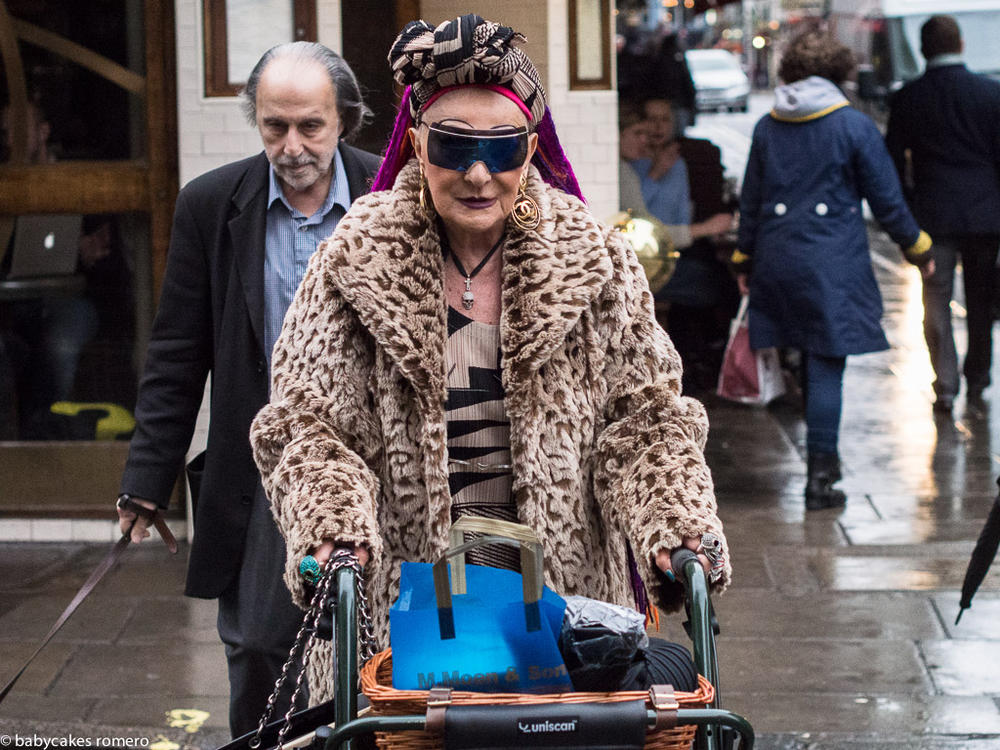
I believe that it can as long as they are unaware. I have a series entitled “dead in the mincers” (which means looking someone straight in the eye) on my website which have subjects that are looking straight at me but they are unaware a photograph is being taken. The key is to catch them before their guard goes up. At that moment I believe you see them as they really are. If you look into people’s eyes, you can see what is behind them, you can tell if they have had a good life or a tough life, do they have a lightness about them or are they carrying a weight of problems? Its all there, its capturing it that is the tricky bit.
Why do you prefer working on real people better than models or stars?
I don’t really enjoy constructed photography. I have done photo shoots but only really for favours. Its not that I prefer real people I just have very little interest in trying to make someone look as good as possible which is all you are ever doing with actors or models. I want to capture them as they are not as they wish to present themselves. Once a person is aware of the camera their guard is up, the face goes on, they shield the real person inside. It becomes about vanity not honesty. Real people are no better once they are conscious of the fact that someone is taking their photograph. Due to the rise of the selfie and facebook the posed photograph has become the definining pictorial representation of our generation but they are not real moments. All those fixed smiles and grinning faces did not exist before someone pulled out their camera. It is not a reality. It is designed to show the world how good a time people are having and how well they are doing but it is built on a falsehood.
Can a photo lens “grab” someone’s personality?
I believe that it can as long as they are unaware. I have a series entitled “dead in the mincers” (which means looking someone straight in the eye) on my website which have subjects that are looking straight at me but they are unaware a photograph is being taken. The key is to catch them before their guard goes up. At that moment I believe you see them as they really are. If you look into people’s eyes, you can see what is behind them, you can tell if they have had a good life or a tough life, do they have a lightness about them or are they carrying a weight of problems? Its all there, its capturing it that is the tricky bit.
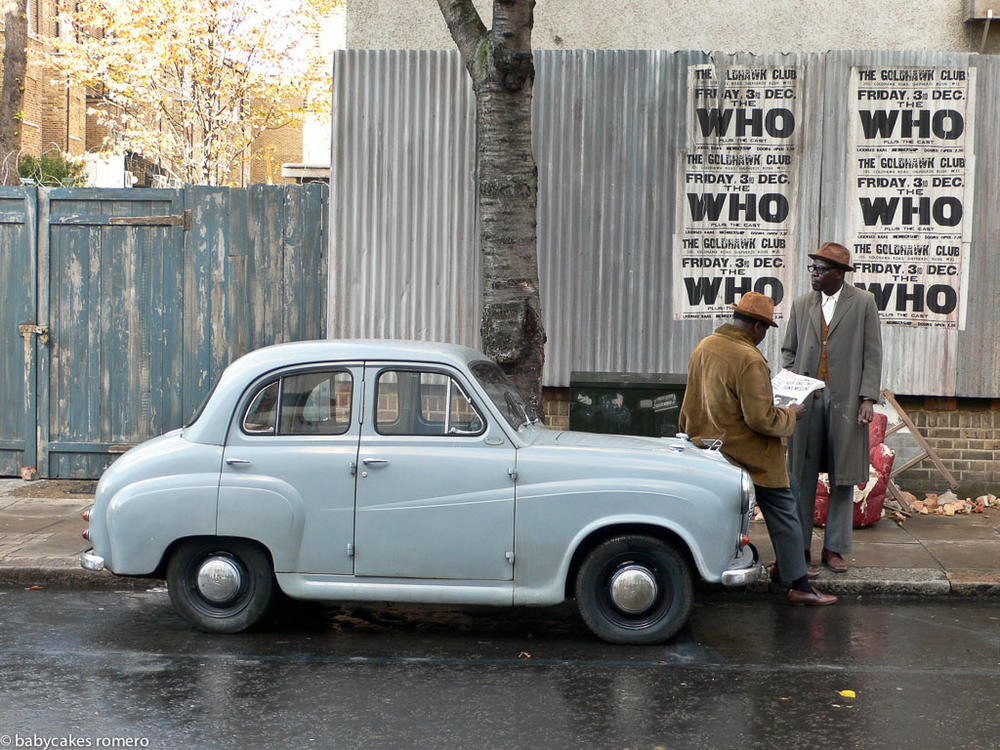 What are the main characteristics that a person you shoot should have?
I am never looking for anything specific although I am mostly drawn towards characterful people, faces that tell a story, someone that isn’t bland. There is so much focus on beauty in the media,advertising and a lot of photography but I find it boring. I tend to glaze over as find it all so similar. My eyes look everywhere but my brain generally registers someone who stands out for whatever reason and that is what I am drawn towards.
What did the life in the streets taught you?
I feel by observing life on the streets I have learnt to empathise with all people. When you get an overview you see that everyone is doing the same thing no matter who they are or where they are from. Most people, it seems, are just trying to get through life with as minimal aggravation as possible. That doesn’t necessarily always work out but I think generally speaking we are all driven by the same thoughts and feelings and to think that you are doing anything different to anyone else is a mistake.
What are the main characteristics that a person you shoot should have?
I am never looking for anything specific although I am mostly drawn towards characterful people, faces that tell a story, someone that isn’t bland. There is so much focus on beauty in the media,advertising and a lot of photography but I find it boring. I tend to glaze over as find it all so similar. My eyes look everywhere but my brain generally registers someone who stands out for whatever reason and that is what I am drawn towards.
What did the life in the streets taught you?
I feel by observing life on the streets I have learnt to empathise with all people. When you get an overview you see that everyone is doing the same thing no matter who they are or where they are from. Most people, it seems, are just trying to get through life with as minimal aggravation as possible. That doesn’t necessarily always work out but I think generally speaking we are all driven by the same thoughts and feelings and to think that you are doing anything different to anyone else is a mistake.
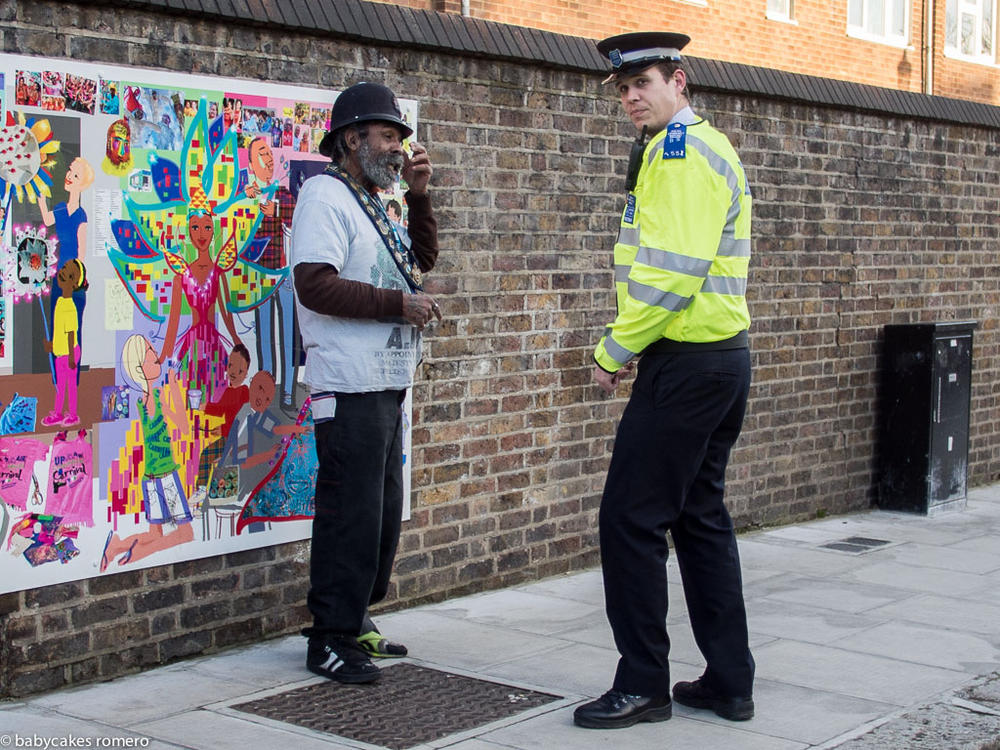 Could you tell me a story (funny etc) that you remember during you shootings out there?
Hmm, I don’t have too many funny stories regarding my street photography. I did see a man in berlin cycling with about five or six parrots sitting merrily on the handlebars as he rode along and chased him down the road and almost fell down a manhole in the process but that might be about it.
I have noticed that you shoot lots of emigrants. Is that on purpose?London is one of the most multi-cultural places on Earth. Every nationality from every country and every continent are present to some degree. I am just trying to reflect what I see. There is no agenda. Immigrants are what make up a massive section of the population of london. My viewpoint is that if you are living in London, you are a Londoner. I don’t care where you are from. London is actually a shining example of how multi-culturalism can function. Its a working model. Everyone is sandwiched together and they just get on with it. If you had a problem with immigrants then London is definitely not the place for you.
I read in a newspaper that the number of the emigrants raised up to 50% this year and that is because of a politician concept, so as to make England multiculturalism. Do you have an opinion about it?
I don’t think that it was a political concept. It just happened. There is no idealogical drive behind it. It merely reflects the transient population of the world. Once London became an active global hub where you could find employment and a certain degree of living it was naturally going to be a destination point for anyone looking to find a life they couldn’t in their home country. The human race has been transient since we left Africa. People have become fixated with borders but it was just a way to compartmentalise ourselves. They are not real. They do not actually exist. If you look at the Earth from space they are nowhere to be seen. The influx of different nationalities helps a country grow and evolve. The diverse population is what makes London great. You can meet people from all over the world without travelling. They make it the thriving metropolis it is. When you are in London you feel like it is alive, bursting with energy and that is to do with all the multitude of people that are here.
Could you tell me a story (funny etc) that you remember during you shootings out there?
Hmm, I don’t have too many funny stories regarding my street photography. I did see a man in berlin cycling with about five or six parrots sitting merrily on the handlebars as he rode along and chased him down the road and almost fell down a manhole in the process but that might be about it.
I have noticed that you shoot lots of emigrants. Is that on purpose?London is one of the most multi-cultural places on Earth. Every nationality from every country and every continent are present to some degree. I am just trying to reflect what I see. There is no agenda. Immigrants are what make up a massive section of the population of london. My viewpoint is that if you are living in London, you are a Londoner. I don’t care where you are from. London is actually a shining example of how multi-culturalism can function. Its a working model. Everyone is sandwiched together and they just get on with it. If you had a problem with immigrants then London is definitely not the place for you.
I read in a newspaper that the number of the emigrants raised up to 50% this year and that is because of a politician concept, so as to make England multiculturalism. Do you have an opinion about it?
I don’t think that it was a political concept. It just happened. There is no idealogical drive behind it. It merely reflects the transient population of the world. Once London became an active global hub where you could find employment and a certain degree of living it was naturally going to be a destination point for anyone looking to find a life they couldn’t in their home country. The human race has been transient since we left Africa. People have become fixated with borders but it was just a way to compartmentalise ourselves. They are not real. They do not actually exist. If you look at the Earth from space they are nowhere to be seen. The influx of different nationalities helps a country grow and evolve. The diverse population is what makes London great. You can meet people from all over the world without travelling. They make it the thriving metropolis it is. When you are in London you feel like it is alive, bursting with energy and that is to do with all the multitude of people that are here.
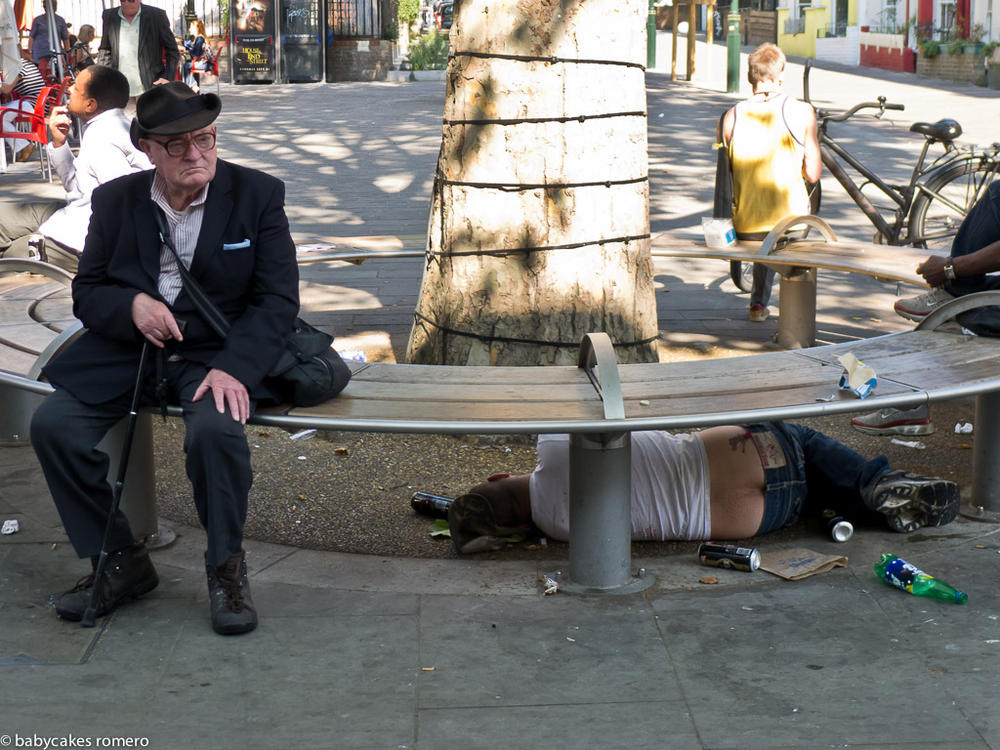 The London`s mayor, last year had said that the emigrants live in inequality because of their lower IQ. What`s your opinion about it?
I think it would imply that he himself has a low IQ if that is his conclusion. There is massive inequality because there is a huge disparity in wealth between the residents. It has nothing to do with race. I made a series of short films in relation to a book called The Spirit Level by Richard Wilkinson and Kate Pickett which details exactly what causes inequality and the impact that it has in society. It explains perfectly what is going on and immigration is not a factor. Unfortunately what is causing it is London has become a hub for the financial world and now attacts the super wealthy from all over the globe. This in turn has created a top tier society which has pushed property prices so high most normal Londoners can no longer afford to buy there and consequently massively increased the gap between the top 1% and everyone else. This kind of gentrification is happening in cities all over the world and it seems there is little can be done about it.
You are traveling all around the world shooting people in the streets. What`s the city that inspired you more and why? Where are you going to travel next?
I have recently been to Berlin and that is a city that I absolutely love. It is a very easy going city that seems to leave its population to get on with things. There is very little police presence but it feels like one of the safest places I have ever been to. Berlin is a city that celebrates freedom as it was born out of repression and understands what it means to be restricted and never wants to go back. This free-for-all attitude is what makes it such a special place and that is why I find it such a great inspiration. They also have very strong laws in place to keep rent controlled and affordable housing which allows the youth and the artists to live in the city. This is as it should be and there are very few cities that are like this now and as a result its has a great vibe and kept its essence.
I was in New York just recently and I was really shocked to find that it has become quite dull because Manhattan is now just full of rich mostly white people because they are seemingly the only ones that can afford to live there. It feels like it has really lost its pulse and its heart. It used to be such an exciting city but all the people that made it so have been pushed out. Its even got quieter at night…the city that never sleeps actually now goes to sleep! And that is purely as a result of property prices going through the roof. I think cities need to understand that property shouldn’t be viewed purely as a commodity but as places which house communities. The people are the lifeblood of a city, without them they are just a collection of buildings.
I am off to los angeles at the end of the year which will be an interesting place to photograph as you mostly have to drive everywhere which might makes street photography a little tricky…its very difficult to drive a car and take a photograph at the same time!
The London`s mayor, last year had said that the emigrants live in inequality because of their lower IQ. What`s your opinion about it?
I think it would imply that he himself has a low IQ if that is his conclusion. There is massive inequality because there is a huge disparity in wealth between the residents. It has nothing to do with race. I made a series of short films in relation to a book called The Spirit Level by Richard Wilkinson and Kate Pickett which details exactly what causes inequality and the impact that it has in society. It explains perfectly what is going on and immigration is not a factor. Unfortunately what is causing it is London has become a hub for the financial world and now attacts the super wealthy from all over the globe. This in turn has created a top tier society which has pushed property prices so high most normal Londoners can no longer afford to buy there and consequently massively increased the gap between the top 1% and everyone else. This kind of gentrification is happening in cities all over the world and it seems there is little can be done about it.
You are traveling all around the world shooting people in the streets. What`s the city that inspired you more and why? Where are you going to travel next?
I have recently been to Berlin and that is a city that I absolutely love. It is a very easy going city that seems to leave its population to get on with things. There is very little police presence but it feels like one of the safest places I have ever been to. Berlin is a city that celebrates freedom as it was born out of repression and understands what it means to be restricted and never wants to go back. This free-for-all attitude is what makes it such a special place and that is why I find it such a great inspiration. They also have very strong laws in place to keep rent controlled and affordable housing which allows the youth and the artists to live in the city. This is as it should be and there are very few cities that are like this now and as a result its has a great vibe and kept its essence.
I was in New York just recently and I was really shocked to find that it has become quite dull because Manhattan is now just full of rich mostly white people because they are seemingly the only ones that can afford to live there. It feels like it has really lost its pulse and its heart. It used to be such an exciting city but all the people that made it so have been pushed out. Its even got quieter at night…the city that never sleeps actually now goes to sleep! And that is purely as a result of property prices going through the roof. I think cities need to understand that property shouldn’t be viewed purely as a commodity but as places which house communities. The people are the lifeblood of a city, without them they are just a collection of buildings.
I am off to los angeles at the end of the year which will be an interesting place to photograph as you mostly have to drive everywhere which might makes street photography a little tricky…its very difficult to drive a car and take a photograph at the same time!